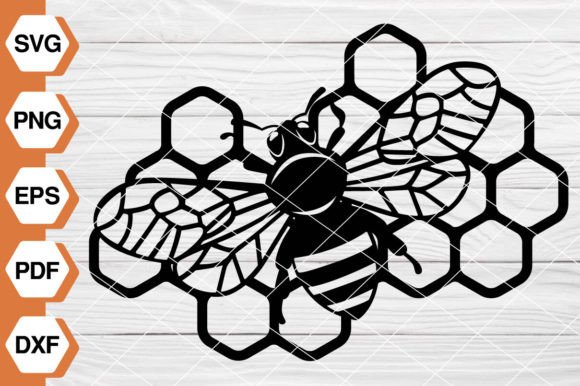
Honeycomb with Bee SVG EP-148
As a designer who’s stitched hundreds of custom pieces—from boutique aprons to Etsy baby onesies—I opened Honeycomb with Bee SVG EP-148 expecting charm. What I found was something more useful: a quietly confident illustration that balances whimsy and wearability. It’s not overly sweet or cutesy; the bee has gentle articulation, the honeycomb cells are evenly spaced but not rigid, and the overall shape fits neatly within a 3.5"–4" diameter—ideal for tote bags, tea towels, and baby bodysuits without crowding seams or distorting fabric.
A Real Project Test: Embroidering This on a Linen-Cotton Kitchen Towel
Last week, I used Honeycomb with Bee SVG EP-148 for a small-batch kitchen towel line sold in a local craft shop. The design sat just left of center on a 17" × 28" towel—no background fill, no border, just the motif in soft mustard and charcoal thread. Because the SVG file scaled cleanly and the EPS held crisp edges at 3.75", I avoided jagged corners when converting to my embroidery software. The result? A finished product customers described as “thoughtful, not trendy”—which matters when your handmade product competes with mass-market prints.
Where This Design Shines (and Where It Needs Care)
Honeycomb with Bee SVG EP-148 works especially well for:
- Custom apparel — Sweatshirt chest placements, cap fronts, and pocket accents hold up beautifully if digitized with moderate stitch density. The bee’s wings and antennae read clearly even at 2.8" wide.
- Baby embroidery — Its rounded lines and open negative space prevent bulk on delicate cotton interlock or bamboo blends. No dense fill stitches trap heat or irritate skin.
- Embroidered patch production — The clean outer edge and balanced weight make it ideal for iron-on or sew-on patches on denim jackets or backpacks.
- Holiday and wedding gifts — Think honey-themed bridal showers, beekeeper anniversaries, or “sweet beginnings” baby blankets. It reads as warm, intentional, and personal—not generic clip art.
But be thoughtful about these situations:
- Small hoop sizes under 3" — Scaling down too far blurs the cell definition. If you’re stitching on a child’s cap or tiny onesie pocket, test first: the bee’s legs and honeycomb texture need breathing room.
- Textured or stretchy fabric — On terry cloth or lightweight knits, use medium tear-away + cut-away stabilizer combo. The design’s open structure means loose threads can snag if stabilizer isn’t secure.
- Dark fabric backgrounds — The PNG and PDF files help preview contrast, but always run a black-and-white mockup. Some light-thread versions lose legibility on navy or charcoal unless satin-stitch outlines are reinforced.
- Frequent-wash items — While the layout avoids excessive underlay, check stitch density in your digitized version. High-density fill in the honeycomb center may stiffen over time on tea towels or bibs.
What This Design Says About Your Brand—Before a Single Stitch
Using Honeycomb with Bee SVG EP-148 signals attention to detail and quiet confidence—not flash, but substance. When customers see this on a handmade apron or personalized sweatshirt, they don’t think “cute graphic.” They think, “This person chose something with care.” That builds trust faster than any tagline. For Etsy sellers and small shop owners, that subtle professionalism lifts perceived value: buyers pay more for pieces that feel curated, not assembled.
It also supports brand consistency. Unlike overly stylized illustrations, this design adapts across mediums—embroidery, screen-printed tote bags, printable gift tags, or even laser-cut wood accents—because its proportions and spacing are inherently scalable and balanced. As a digital embroidery file, it’s versatile without being vague.
Practical Designer Notes Before You Stitch
Before committing Honeycomb with Bee SVG EP-148 to your next project, do these five things:
- Test on scrap fabric — Especially if using textured linen, fleece, or knit. Watch how the honeycomb cells lay flat and whether the bee’s wing edges feather or pucker.
- Review thread color contrast — Try matte cotton and rayon side-by-side. Rayon adds sheen but can mute subtle gradients; cotton gives softer, more tactile results.
- Confirm hoop size and placement — The design fits comfortably in a 4" × 4" hoop, but if you’re layering it with text or another motif, double-check spacing in your software preview.
- Inspect small details in vector view — Open the SVG or EPS in Illustrator or Inkscape. Look for stray anchor points near the bee’s antennae or cell junctions—clean paths mean smoother embroidery conversion.
- Verify licensing for commercial use — Since this is a digital embroidery file sold as part of Illustrations and Graphics, confirm whether resale of finished embroidered products or use in client work is permitted. When in doubt, contact the seller directly before listing on Etsy or fulfilling wholesale orders.
Also worth noting: the inclusion of DXF and PDF files makes Honeycomb with Bee SVG EP-148 useful beyond machine embroidery—it bridges into vinyl cutting, laser engraving, and printable mockups for your shop listings. That cross-format flexibility is rare in single-motif graphics and adds real workflow value for creative entrepreneurs juggling multiple output types.
Final Thought: Not Just a Bee—A Thoughtful Starting Point
Honeycomb with Bee SVG EP-148 won’t shout from a shelf—but it will hold attention longer. It’s the kind of embroidery file that earns repeat use because it supports the product, not overshadows it. Whether you’re designing for a honey farm’s merch line, stitching personalized baby gifts, or building a cohesive collection of nature-inspired embroidery projects, this design delivers quiet reliability. It’s proof that strong design in the craft business isn’t about complexity—it’s about clarity, intention, and knowing exactly where your stitch will land.